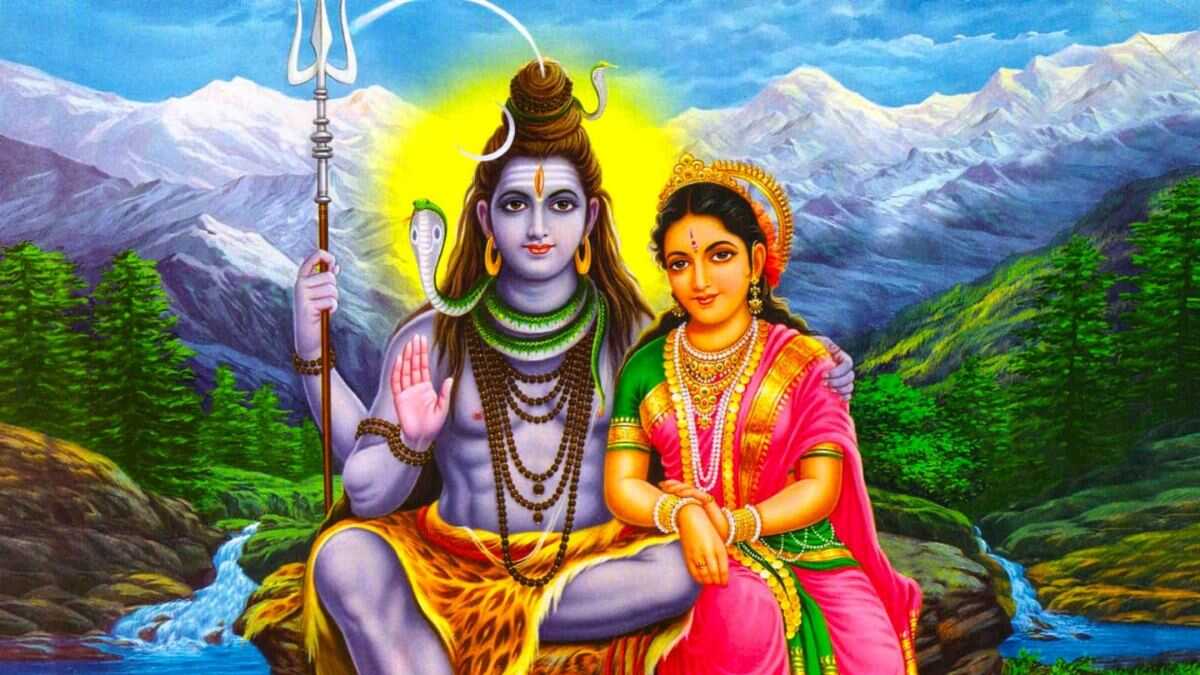
Within the rich narratives of Hindu mythology, the figure of Lord Shiva stands as an enigmatic deity. While there is widespread agreement on his divine nature, the stories surrounding his marriages present a fascinating blend of contradictions and complexities. In this exploration, we delve into the accounts found in the Puranas to shed light on Lord Shiva’s four wives and the profound roles they played in shaping the cosmic order.
First Wife: Mata Sati
According to the Puranas, Prajapati Daksha, a son of Brahma, resided in the Himalayan region. Daksha had 84 daughters from his two wives, Prasuti and Veerani. Sati, born to Prasuti, captured Lord Shiva’s heart, leading to a marriage against Daksha’s wishes. The tragic tale unfolds when Daksha, in his arrogance, organized a grand yajna but deliberately excluded Shiva and Sati from the festivities. Sati, undeterred, attended the yajna, only to face humiliation and derogatory remarks about Shiva from her own father.
Overwhelmed by grief and humiliation, Sati sacrificed herself in the yajna fire. This event marked the genesis of Sati transforming into Shakti. In response, Shiva, upon learning of Sati’s demise, unleashed Veerabhadra, who beheaded Daksha, leading to the destruction of the sacrificial ground. Shiva, in his Tandava dance, carried Sati’s burnt body across the cosmos, and where her body parts fell, Shaktipeeths emerged. These sacred sites, totaling 108 according to Devi Bhagwat, signify the divine feminine energy.

Second Wife: Mata Parvati
Born to King Himavan and Queen Mainavati, Parvati, also known as Gauri or Mahagauri, emerged as the second consort of Lord Shiva. Himavan and Mainavati, having prayed to Adishakti, were blessed with Parvati, whose name means ‘queen of the mountains.’ Parvati, renowned for her victories over demons like Shumbh, Nishumbh, and Mahishasura, is revered as Navdurga.
The world, weakened by Sati’s self-immolation, sought the intervention of Adishakti to vanquish the demon Taraka. Adishakti, pleased with the beauty of the Himalayas, foretold that her power would manifest as Gauri, marrying Shiva and bearing a son destined to defeat Taraka. Parvati, in her unwavering devotion, underwent penance in the forest, facing challenges from the Saptarishis who sought to dissuade her from marrying Shiva. Her resilience earned her their blessings, and Parvati returned to Shiva.

Third Wife: Mata Uma
The identity of Uma as a distinct wife of Lord Shiva is salient. Uma, often associated with the goddess of the land, is characterized by her kind and simple heart. Legend suggests that when Shiva assumed the form of Mahesh, Parvati transformed into Uma. Uma Devi, worshipped at Uma Nagari in Kashmir and Karnprayag in Uttarakhand, exemplifies the symbiotic relationship between Shiva and Uma.

Fourth Wife: Mata Mahakali
Maa Kali, revered as the fourth wife of Lord Shiva, epitomizes the fierce aspect of the goddess. Legends speak of her vanquishing the formidable demon Raktabeej, whose blood spawned countless demons. Lord Shiva, lying at Kali’s feet to calm her wrath, exemplifies the cosmic balance between destruction and regeneration.

Conclusion:
The tales of Lord Shiva’s marriages, woven through the intricate fabric of Hindu mythology, reveal the cosmic dance of creation, preservation, and destruction. Each wife, from Sati to Mahakali, embodies different facets of the divine feminine, contributing to the intricate balance of the cosmos. As devotees continue to worship these manifestations, the enigma of Lord Shiva’s multiple marriages continues to captivate the imagination, inviting seekers to delve deeper into the mystique of the divine.




Leave a Reply