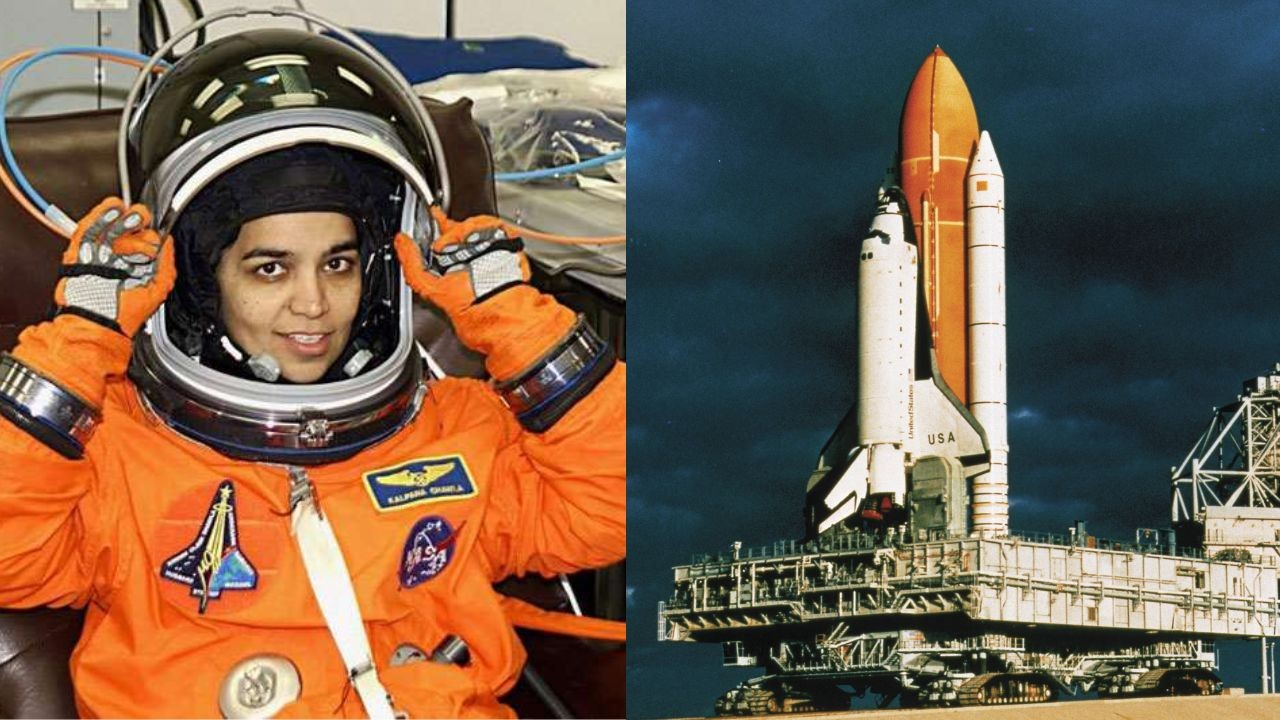
Kalpana Chawla, the visionary astronaut and aerospace engineer, forever etched her name in history as the first woman of Indian origin to venture into space. Born on March 17, 1962, in Karnal, Haryana, her journey from a young dreamer to a space pioneer is marked by resilience and unwavering dedication.

Chawla’s early connection with the skies traces back to her childhood, where she shared moments watching planes with her father. Her academic foundation was laid at Tagore Baal Niketan Senior Secondary School in Karnal. Determined to explore the realms of aerospace engineering, she pursued a Bachelor’s degree at Punjab Engineering College in India.
Crossing continents in 1982, Chawla continued her educational pursuits in the United States. She earned a Master’s degree in Aerospace Engineering from the University of Texas at Arlington in 1984. Undeterred, she secured a second Master’s degree in 1986 and concluded her academic odyssey with a Ph.D. in aerospace engineering from the University of Colorado Boulder in 1988.
Professional Journey:
Embarking on her professional journey at NASA Ames Research Center in 1988, Chawla delved into research on computational fluid dynamics. Her expertise saw her joining Overset Methods, Inc., where she ascended to Vice President and research scientist in 1993. Alongside groundbreaking research, Chawla held certifications as a Flight Instructor and possessed various Commercial Pilot licenses.
The culmination of a lifelong dream arrived in March 1995 when she joined the NASA Astronaut Corps. Her inaugural spaceflight took place in 1997 as part of the Space Shuttle Columbia, flight STS-87. During this mission, she completed 252 orbits, covering 10.4 million miles and spending over 376 hours in space.
Tragedy Strikes:
The second space mission, STS-107, in 2003 ended tragically. The Space Shuttle Columbia disintegrated during re-entry into Earth’s atmosphere on February 1, 2003. Kalpana Chawla and six other crew members lost their lives in a devastating event that shook the space exploration community.
Posthumous Awards and Honors:
In recognition of her exceptional contributions, Kalpana Chawla posthumously received the Congressional Space Medal of Honor. Her memory lives on through the numerous streets, universities, and institutions named in her honor.
Personal Life and Legacy:
Kalpana Chawla’s personal life included her marriage to Jean-Pierre Harrison on December 2, 1983. Following the Columbia disaster, filmmakers approached Harrison to create a film about Kalpana’s life, a proposition he declined, choosing to preserve her memory as a personal matter.
In conclusion, Kalpana Chawla’s indomitable spirit, academic prowess, and groundbreaking contributions to aerospace engineering make her a lasting inspiration in the annals of space exploration. Her legacy resonates globally, emphasizing the boundless potential of human determination and the pursuit of knowledge.


Leave a Reply