

The veena is a chordophone family of instruments that has been the heart of South Asian classical music for a millennia and a half. Known for their authenticity and rich, natural sound, these instruments produce music through vibrating strings, and their timeless appeal continues to captivate audiences. All veenas are different in appearance, shape, and tone, yet they all share the same cultural meaning in India, and other parts of the world. This article delves into the history, features, and evolution of some of the most iconic Veena instruments, such as the Rudra Veena, Sitar, Sarod, Saraswati Veena, and Vichitra Veena.
Rudra Veena: The Ancient Sound of Divinity

The rudra veena is one of the oldest and largest stringed instruments in indian classical music. This Veena is like Lord Shiva, it brings the listener to the spiritual realm of India and cleanses the mind with it’s low, meditative tone. It has a very complex design and consists of a long body made of wood with brass frets and two huge resonators. Although it has lost some of its popularity in modern music, the Rudra Veena is still considered the “mother of all string instruments” and stands as a symbol for traditional Indian music.
Sagar Veena: A Modern Innovation
Developed by Pakistani lawyer and philosopher Raza Kazim in 1970, the Sagar Veena represents a modern take on traditional Veena instruments. Mostly used in North Indian classical music, it has nine playing strings and covers a great range of pitch. The Sagar Veena is a fairly new instrument, but it has gained some fame due to the work of Kazim’s daughter, Noor Zehra, the only person known to play the instrument. With its soothing tonal quality, the Sagar Veena has the potential to make a lasting impact on contemporary South Asian music.
Sarangi: The Colorful Veena

Well, technically, the Sarangi is not exactly a Veena, but it is in the same classification of stringed instruments, and it is also a very old instrument in the history of Indian music (dating back to 5000 BC. Its name translates to “one hundred colors” and it is appropriately named because it can sing like a human, and can sing any kind of music. Its design includes several sympathetic strings and requires a bow to play. During the 19th Century, the Sarangi was frequently utilized to play along with the classical Indian dances such as Nautch. The rich, warm sound of it is still very much a part of contemporary classical music today.
Saraswati Veena: The Goddess of Music
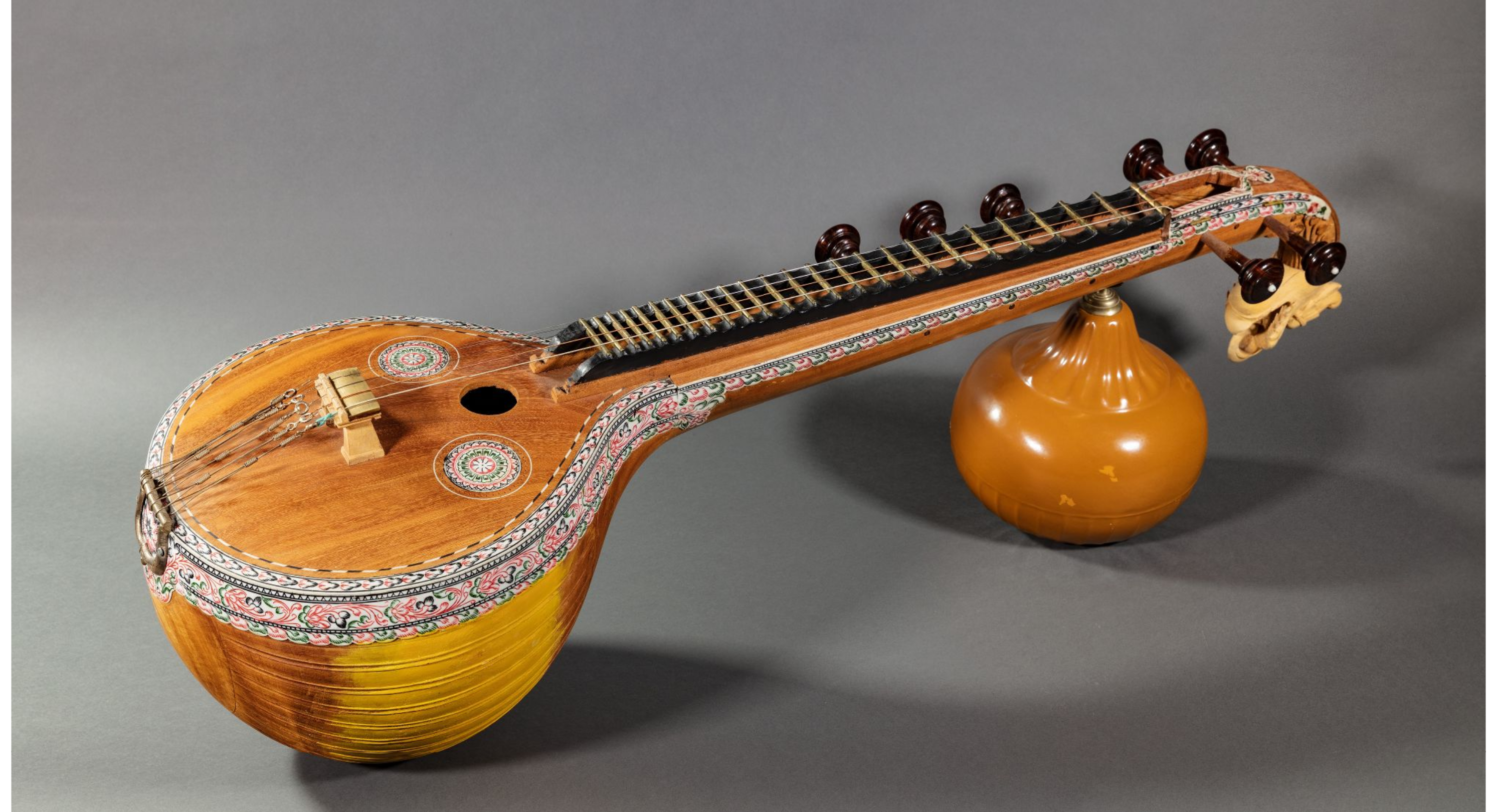
The Saraswati Veena, as this instrument is called, takes its name from the Hindu goddess of wisdom and music, and its ancestry dates back to 1500 BC. It has a strong, metallic, ringing sound and is frequently used to play Indian ragas. It is not only musically significant, but also symbolic in Hindu culture, often found in any iconography of the goddess Saraswati. Made of jackwood, the Saraswati veena has 24 brass frets and drone strings, and the sound it emits is introspective and healing.
Sarod: The Modern Melodic Veena
The Sarod, with its modern form solidified in the 19th century, is a staple in Hindustani classical music. It is smaller than most veena’s, but has a much deeper sound because the strings are metal and the body is wooden. The Sarod, played with a plectrum, is well known for its complicated melodies and is usually played with a tabla and tambura in concert. It is one of the most important instruments in North Indian music and still is very popular in India and Pakistan.
Sitar: A Global Icon
The Sitar, is probably the best known Veena in the world, and found international fame through artist such as Ravi Shankar, who influenced many Western musicians, such as George Harrison of The Beatles fame. Dating back to the 16th century, the sitar has become the icon of indian music, with its “jawari” (resonant) sound entrancing audiences for generations. It has sympathetic strings and long frets which produces a very colorful yet meditative quality which is great for solo pieces as well as classical compositions.
Vichitra Veena: The Rare Jewel
The vichitra veena is a very complicated ancient string instrument used in hindustani music. It is played by sliding a glass piece along the strings and it kind of hums like a person. The Vichitra Veena is seldom heard of these days but is prized for its mellow tones and difficult playing style. It is one of the most ornate looking veenas because of its large size and its peacock designs but it is still limited pretty much to classical music.
Other Veena Instruments: Ranjan and Triveni Veena
Ranjan Veena and Triveni Veena, are more modern creations in the field of stringed instruments, invented by Pandit Niranjan Haldar. These “new age” instruments are gradually gaining recognition, but they haven’t reached the level of popularity of the older ones. I’m sure with enough development they could somehow fit into the South Asian music scene as it constantly changes.
Conclusion
The Veena family of instruments has influenced the direction of South Asian music for hundreds of years, some, such as the Rudra Veena, have become extinct, while others, such as the Sitar, have flourished. With such modern variations as the Sagar Veena, and with such older instruments as the Sarangi experiencing a renaissance, it seems apparent that the Veena’s rich heritage will live on to inspire future generations of musicians. Be it through old songs or new inventions, these instruments are still very much a part of the South Asian sound.
About the Author


