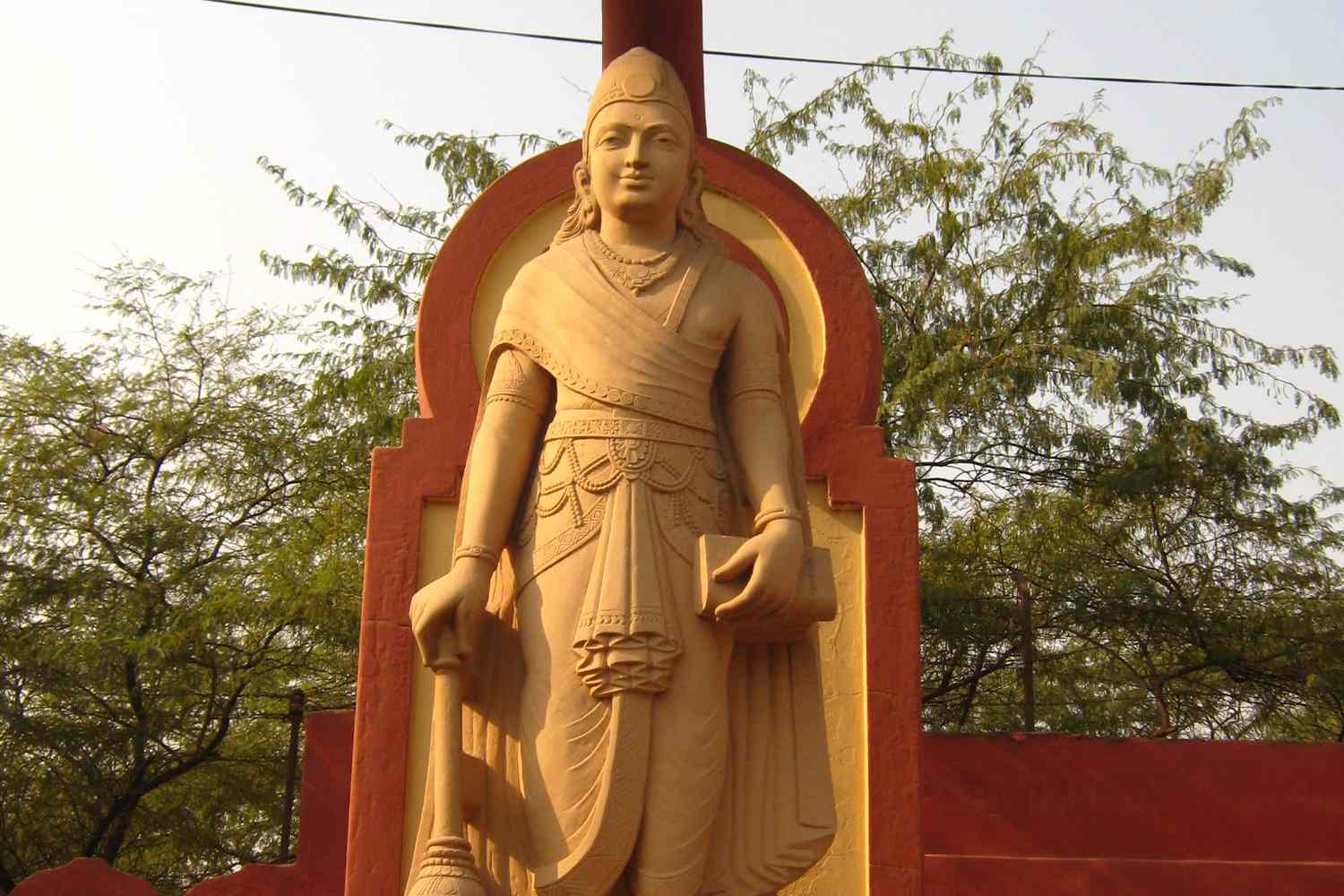
Introduction to Chandragupta Maurya
Chandragupta Maurya was a very pivotal ruler of the ancient Indian past, who also marks him as the founder of the Maurya dynasty. Born in the early 4th century BCE, he remains a name associated with the first true unity and security of a large section of the Indian peninsula. From an age in which small kingdoms reigned, and there was no central control, Chandragupta rose to present a single force of power that also served as a base for years to come in terms of stability in a government and political setup.
Early Life and Background

Very little is known of Chandragupta Maurya’s early years. We find in historical texts and legends very different reports of his birth, some that he came from humble roots, others that he was of royal blood. What is for sure is that he came of age in a time of political turmoil, which followed the fall of the Nanda dynasty in Magadha. It is put forward that his early experience of instability may have been the basis that fueled his ambition to bring peace and unity to the region.
A point of change in his life came when he met the brilliant scholar and strategist Chanakya, also known as Kautilya or Vishnugupta. Chanakya saw in Chandragupta the quality of a leader and took him under his wing to guide him in politics, war, and statecraft.
Rise to Power
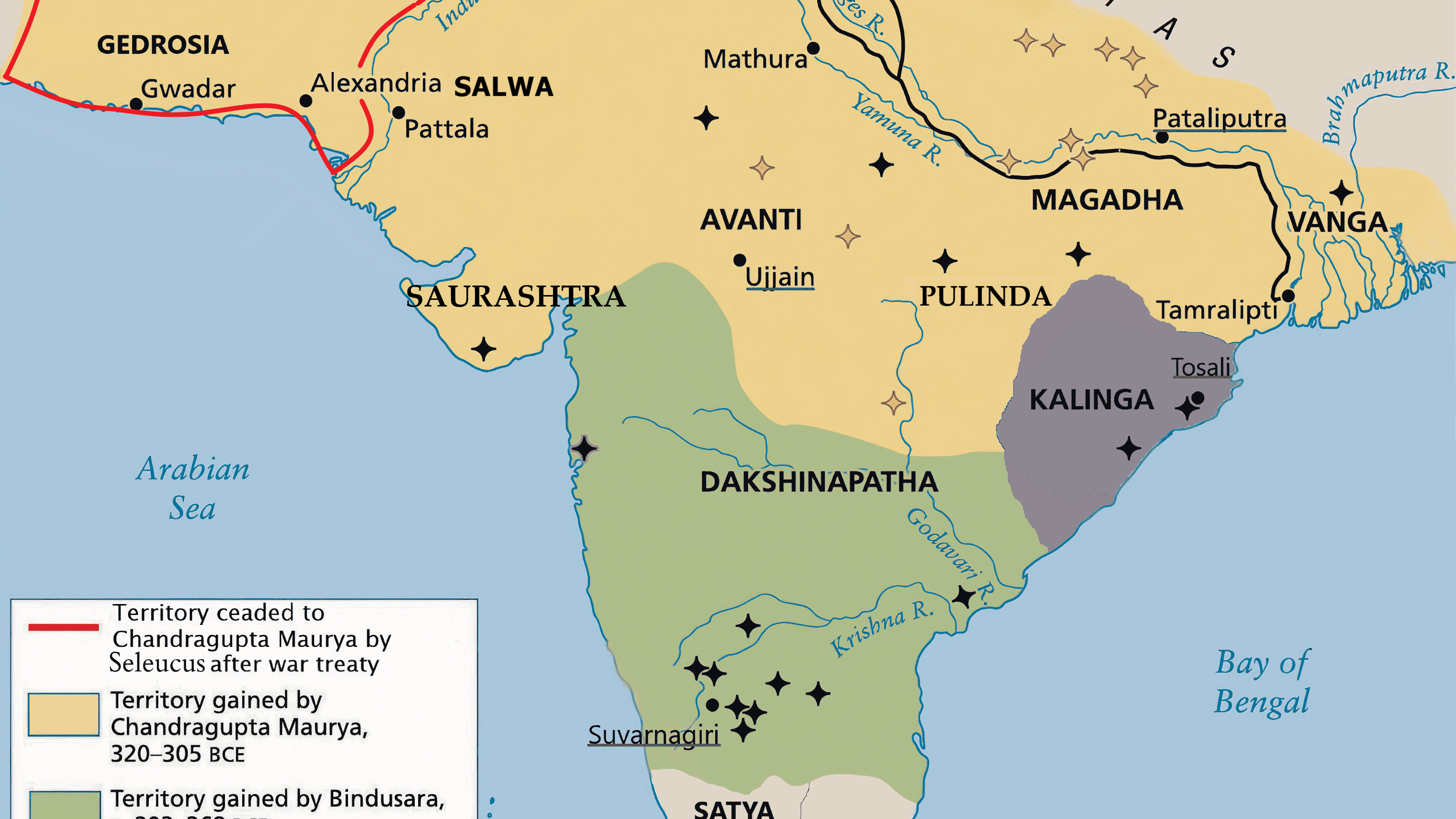
With the support of Chanakya, Chandragupta began his struggle against the Nanda rulers. Through clever strategy, alliances, and military offensives, he was able to defeat the Nanda dynasty in 322 BCE. That victory, which also saw the birth of the Maurya Empire, which had Pataliputra (present-day Patna) as its capital.
Chandragupta did not confine his success to Magadha. He expanded quickly to take in areas which today we would put in the north and center of the subcontinent. His military forays showed discipline, organization, and a clear picture of what he wanted to achieve in terms of which lands were to be under his rule.
Administration and Governance

Chandragupta Maurya was not only a great conqueror but also a very able administrator. During his time, the Mauryan Empire saw the installation of what was to be a very efficient system of government. The empire was divided into provinces, which in turn were run by officials who dealt with law and order as well as revenue collection.
Chanakya\’s Arthashastra, which is related to this time period, also puts out what is known of the Mauryan administration. In it, he stresses strong leadership, economic policy, intelligence gathering, and the justice system. Chandragupta implemented fair taxation, promoted agriculture, and maintained a large standing army for the defense of the empire.
Relations with Foreign Powers
One of the great accomplishments of Chandragupta Maurya was his interaction with foreign rulers. After the invasion of India by Alexander the Great, Chandragupta sought to have diplomatic relations with Alexander’s successors in the northwest. He, in fact, agreed with Seleucus I Nicator, who was a part of the Greek Successors. This agreement extended Maurya’s control to the northwest and also put in place peaceful relations, which included the exchange of envoys.
Family and Successors

Chandragupta Maurya was followed by his son Bindusara, who in turn expanded and solidified the empire. Later, Bindusara became the father of Ashoka, who was to become the greatest of Indian rulers. Thus, Chandragupta set in motion a dynasty that reached its height under Ashoka’s rule.
Later Life and Legacy
In the late years of his life, Chandragupta Maurya is reported to have left his throne and taken to ascetic life under the influence of Jain philosophy. Also, it is tradition that he went to Shravanabelagola in what is today Karnataka and spent his last days in meditation.
Chandragupta Maurya is an immense figure. As the founder of India’s first great empire and a ruler who balanced military power with administrative skill, he is remembered. His rule saw the rise of what was to be a golden age in ancient Indian history, which in turn shaped its governance, economy, and political thought for the generations to come.


Leave a Reply