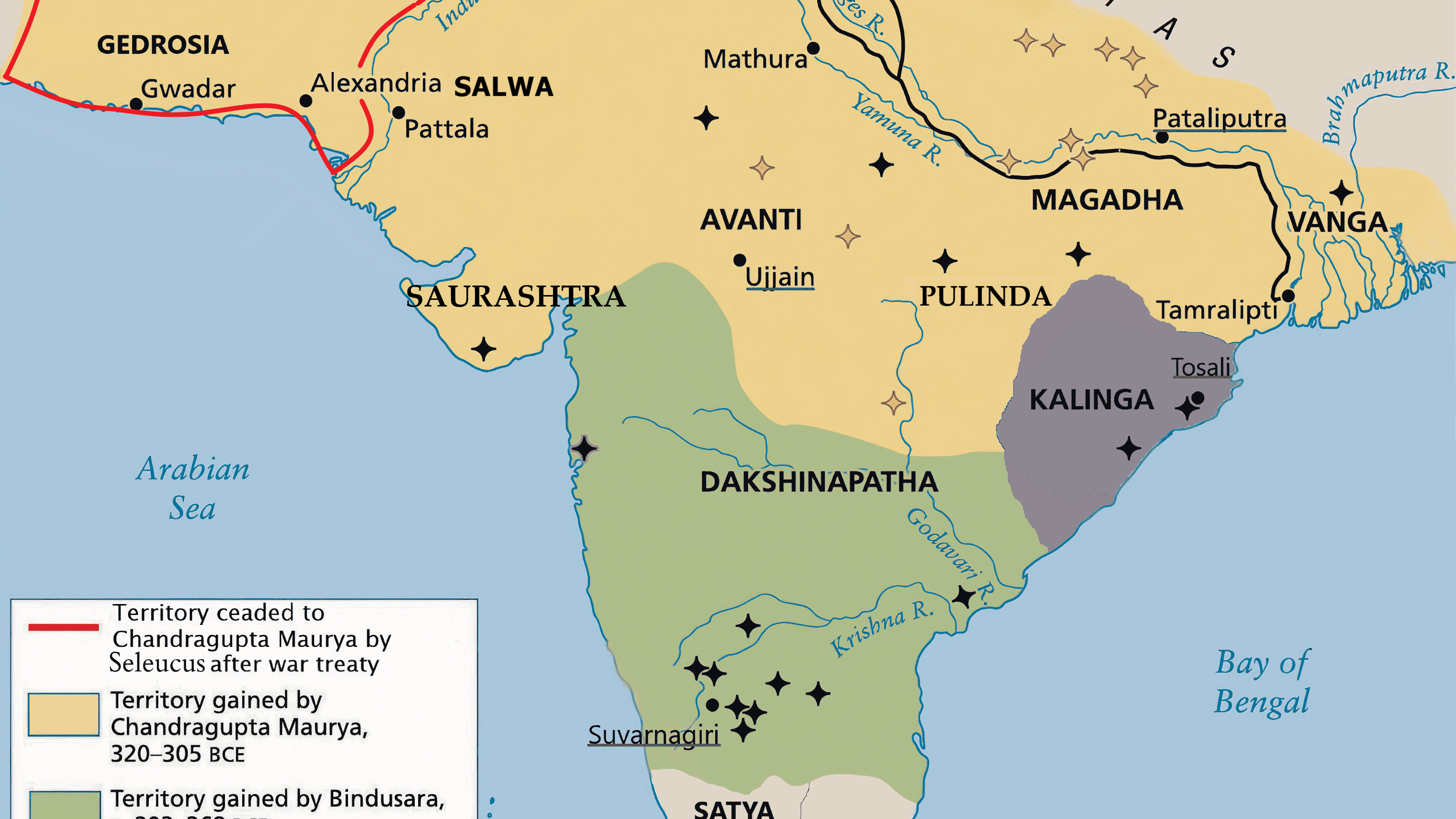
In the pages of South Asian history, the ancient kingdom of Kalinga is a prominent figure. Which includes the present-day state of Odisha and parts of northern Andhra Pradesh, Kalinga was more than just a geographical entity; it was also a dynamic player in maritime trade, architectural excellence, and martial skill. From its mythical past in the Mahabharata to its struggle against the greatest Indian empires at the time, the story of Kalinga is that of resilience and resurgence.
Ancient Origins and Mythological Roots
The history of Kalinga goes back to the remote past. Peopled by Indo-European migrants around 1500 BC, the region soon developed a separate identity. From ancient texts, it is reported that the kingdom was founded by King Vali, which also puts it in the same lineage as other eastern powers like Anga and Vanga.
Kalinga is a major player in the Mahabharata. In the great Kurukshetra War, which was catastrophic, the Kalinga forces under King Srutayus fought for the Kauravas. Although they lost the war, the fact that Kalinga’s armies were present on such a large scale in the war stage shows the early military importance of the kingdom. Also at this time, which may be considered early in Kalinga’s history, are its capitals, Dantapura and Rajapura, which served as the administrative centres of a realm that in the near future would face very serious threats from the west.

The Maurya Crisis and the Ashokan Turnaround.
By the 4th century BC, Kalinga had become a great sovereign power. But its independence was put to the test by the rising Magadha power. While Mahapadma Nanda of the Nanda dynasty did at times bring Kalinga under Magadha’s control, it was the Mauryan Empire that played out the most definitive event in the region’s history.
In the year 261 BC, Emperor Ashoka set out for an enormous campaign to take back Kalinga, which had become a player in the Mauryan war of succession and, as a result, declared its independence. That war also became the largest in Ancient history. What we are told by history is that over 100,000 men died in the field, and a further 150,000 were made prisoners of war. It was this very violence that pushed Ashoka to give up the sword and adopt Buddhism. For Kalinga, however, it was a different story of defeat, the economic and military base of which was crushed for a generation.
The rise of Chedi and the Age of Kharavela.
During the Mauryan Empire’s fall, Kalinga rose from its ruins. In the first century BC, the Chedi or Mahameghavahana dynasty came into power and saw the advent of what would be known as a golden age. The dynasty had a very distinguished ruler, Emperor Kharavela, who restored the king’s past glory.
From the records of the Hatigumpha Pillar inscription, we learn that Kharavela was a brilliant military strategist and a patron of Jainism. Unlike his predecessors, who paid tribute to Magadha, Kharavela went on the attack. He defeated the Satavahanas in the west, defeated the Sungas of Magadha and also forced the Indo-Greek king Demetrius to retreat. During his rule, Kalinga transformed from a conquered province into an imperial power that extended from the Ganges to the southern tip of India.

The Eastern Gangas and Cultural Zenith
Following the fall of the Chedi’s power, the region experienced the rise of the Eastern Ganga dynasty, which by 496 AD was well in progress. That era also saw a turn toward great cultural and architectural growth. For almost a millennium, the Eastern Gangas ruled, which in turn gave them the stability to see art and religion grow. They are also known for their great works in architecture, which include the famous Jagannath Temple in Puri and the Sun Temple at Konark.
Conclusion
The Kalinga story is a reflection of the region’s unbroken spirit. From the ravages of Ashoka’s war machines to the intricate politics of the Middle Ages, the kingdom rose from the ashes. Today, the legacy of Kalinga lives on in the ruins of its fortifications and the inscriptions in its caves, but also in the cultural pulse of Odisha, which stands as a testimony to a past when this eastern power had the fate of the subcontinent in its hands.




Leave a Reply