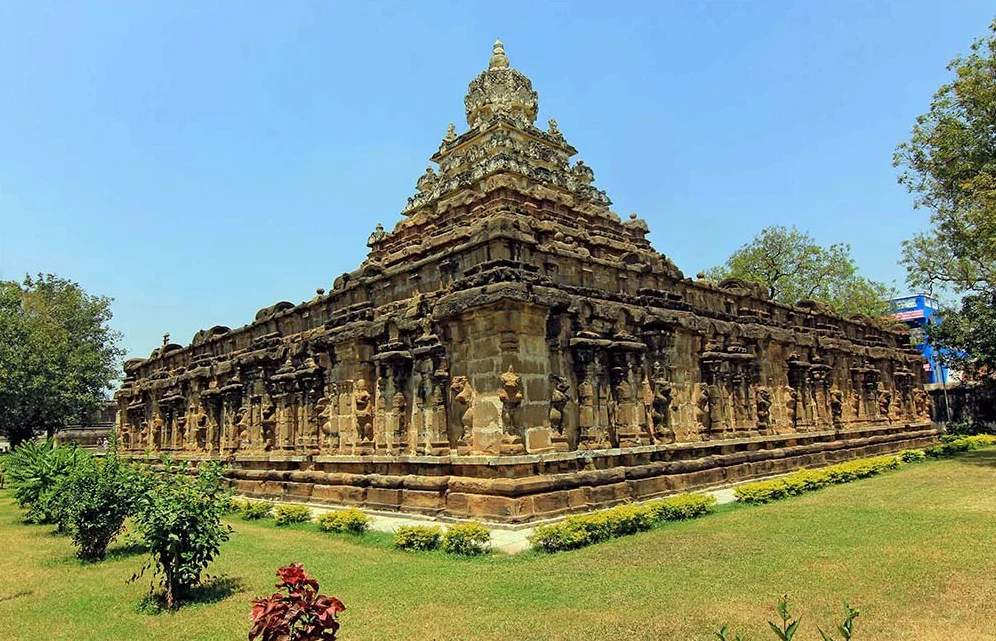
Starting in the fourth century, southern India saw authority shaped by the Pallava dynasty. Even gone, their mark stayed like a shadow on stone. Where the Pallavas started remains unclear, yet scholars often link them to rising power across the Deccan and parts of northern Tamil regions. At their peak, control stretched through stretches of Tamil Nadu, Andhra Pradesh, and even into Karnataka. Positioned near major routes, land travel plus maritime movement flowed beneath their oversight, fueling prosperity while reinforcing rule.
Capital and Administration
Once filled with thinkers, traders, and makers, Kanchipuram pulsed at the core of Pallava rule. Growth came when leaders chose to lift learning, markets, and creativity together. Revenue flowed from farm levies managed under careful watch. Local groups in villages took charge – settling disputes, fixing paths, meeting shared demands.
Key Figures Shaping Politics
A ruler named Mahendravarman I left a mark on Pallava times. Under him, art changed – rock-cut temples started showing up everywhere. Soon enough, leadership moved to Narasimhavarman One instead. He struck hard, capturing Vatapi, the fortress of the Chalukya enemies. A victory like that made his name last forever – Vatapikonda. While battles shaped the land, culture grew just as strong alongside. Fighting dragged on without pause – Chalukyas at first, followed by Pandyas, then Rashtrakutas stepping in – yet Pallava strength stayed firm. Words weighed as heavily as swords. Here and there, sharp-minded kings shaped outcomes across centuries.

Buildings and Traditions Across Centuries
Stone by stone, the Pallavas redefined South India’s sacred spaces. Instead of cutting into rock faces, they raised free-standing shrines from solid blocks. In Mahabalipuram, five shrine shapes mimic ancient carts – each hewn with steady hands. Deep lines on massive stones show moments frozen: a holy man sits beneath a stream that never dries. Vision drove every chisel stroke. Tall walls rose in Kanchipuram, then secret rooms tucked within – proof of careful hands at work. That time did not bring them down speaks louder than words ever could. Fanned by poets, philosophers, and scribes, creativity stirred under their reign through words in Tamil and Sanskrit. With room to wander, followers of Shiva, those drawn to Vishnu, moved within faith without restraint.
Fall of the Pallava Dynasty
War wore down the Pallavas after the late 700s, while rivals gathered strength. Power did not stay firm under their rule but faded across the following century. The Cholas pressed forward quickly, shifting how things stood. Little survived by the early 800s except traces of what once was. Others stepped into view as their story ended without noise.
Legacy of the Pallavas
Deep in South Asia’s history, traces of the Pallavas remain clear. More than builders, they opened paths others followed – Cholas, Pandyas, all walked them. Their stone temples still rise, unmoved by years. These structures hold long chapters of making and shaping, known far beyond borders as high points of old southern craft.



Leave a Reply