



The Kingdom of Vanga was an essential state within South Asia’s history, as well as a significant influence on both the region’s political development and its cultural evolution. Its importance to this day is based on the long-standing trade routes that extended throughout this part of Southeast Asia, thus making it one of the most important centers of ancient cultural heritage.

Geographical Position
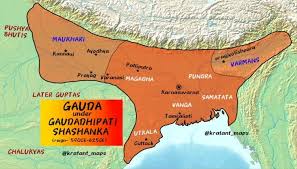
The Kingdom of Vanga was situated in what is now the eastern region of India.
It mostly encompassed what is now southern Bengal and portions of Bangladesh, notably the Ganga–Brahmaputra delta area.
Vanga was economically and strategically significant due to its abundant soil and river networks.
Historical Context
The Mahabharata, Ramayana, and Puranas are only a few of the ancient Indian writings that mention Vanga.
Around the sixth century BCE, it was an independent nation, and later it fell under the sway of powerful empires like the Mauryas and Guptas.
Vanga maintained its unique cultural identity despite outside influences.
Importance in Politics and the Military
The monarchs of Vanga were renowned for their formidable navy.
The naval forces of Vanga aided in protecting the kingdom from foreign invasions and maintaining control over coastal trade routes.
The kingdom frequently engaged in commercial and diplomatic ties with areas of Southeast Asia.
Trade and Economics
Because of the rich alluvial soil, agriculture served as the foundation of Vanga’s economy.
Vanga was well-known for its maritime commerce, which included the export of textiles, rice, spices, and handicrafts.
Vanga was connected to Sri Lanka and Southeast Asia by its coastal ports.
Society and Culture
The residents of Vanga spoke early forms of Prakrit and Sanskrit-influenced dialects, which eventually helped in the development of the Bengali language.
Both Buddhism and Hinduism thrived in the area.
Daily life was influenced by river-based occupations, folk customs, and art.
Further Details
One of the cornerstones of Bengal’s historical identity is thought to be Vanga.
Compared to other ancient Indian kingdoms, it stood out for its naval prowess.
Modern Bengal is still influenced by Vanga’s cultural legacy.
Short Summary:
In addition to being a regional power, the Kingdom of Vanga contributed to the ancient culture of South Asia. Today, because of its long-standing history, extensive trade routes, and cultural legacies, the Kingdom of Vanga continues to be an important part of historical research.